

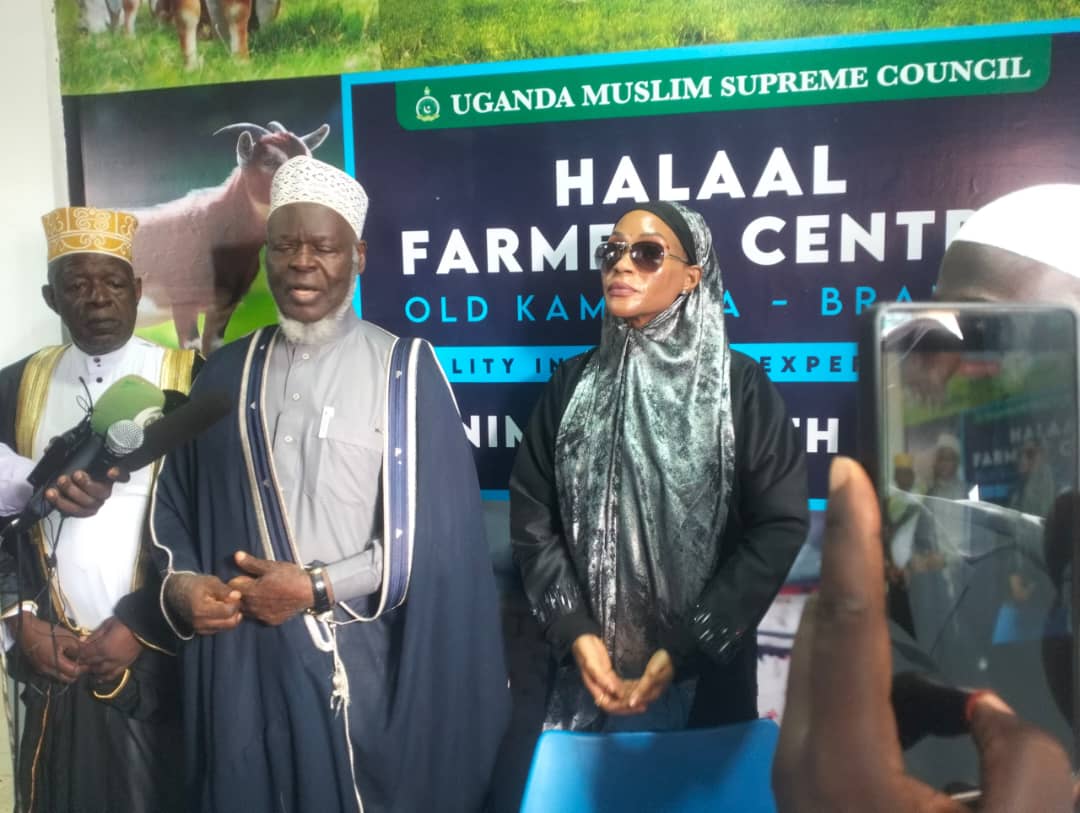
The Uganda Muslim Supreme Council has officially launched its second Halal Farmers Centre, a move aimed at promoting agricultural productivity and providing Muslim farmers with access to certified farm inputs.
The launch took place at the UMSC headquarters in Old Kampala, with Sheikh Shaban Ramadhan Mubaje officiating the ceremony by cutting the ribbon at the new facility.
The Mufti later toured the outlet, guided by Fiona Miggade Kitaka, executive director of Matugga Industries & Logistics Hub, alongside her technical team.
“The Halal Farmers Centres are designed to provide farmers with genuine and certified agricultural and livestock inputs, as well as advisory services to enhance productivity and protect them from counterfeit products and exploitation,” Miggade said.
“We are committed to supporting farmers with high-quality inputs that improve both productivity and household incomes.”
The centre forms part of a broader initiative to establish similar facilities in 87 Muslim districts across Uganda under a strategic partnership between UMSC and Matugga Industries.
The programme is intended to create a structured supply chain for halal-certified agricultural inputs while strengthening farmer capacity.
During the event, Sheikh Mohammed Ali Waiswa urged attendees to embrace responsible consumption practices.
“Consume what is lawful and good, and avoid harmful practices,” he said, stressing that adherence to lawful consumption fosters moral conduct and discourages vices in society.

UMSC Secretary General, Hajj Abbas Muluubya Ssekyanzi, emphasized that the Halal Farmers Centres are part of a long-term strategy for sustainable community transformation.
“Key interventions include the formation and registration of farmers’ groups, expanded training in agriculture, livestock and poultry, continuous community sensitisation, and strengthening linkages between farmers, markets, and support services,” he said.
Hajj Ashiraf Zziwa, the UMSC Spokesperson, noted that the initiative is expected to attract more young people into agriculture, which remains the backbone of Uganda’s economy, rather than leaving them idle in trading centres or engaged in less productive ventures.
The launch also highlighted the growing intersection between faith-based values and economic empowerment, with leaders underscoring the role of halal principles in shaping ethical production, consumption, and trade.
The event concluded with participants receiving Iftar packages, including milk, followed by a dinner for UMSC management and representatives from Matugga Industries.
